Sound ground. Sound decisions.
LEARN MOREUnderground excavations in Escondido represent a specialized branch of geotechnical engineering that addresses the challenges of creating stable, safe subterranean spaces within the region's complex geological setting. This category encompasses the full lifecycle of subsurface projects, from initial site characterization and feasibility studies through detailed design, construction monitoring, and long-term performance assessment. In a city experiencing steady urban growth and infrastructure renewal, the demand for underground solutions—ranging from utility tunnels and transit corridors to deep basements and stormwater storage systems—continues to rise. Properly executed underground excavations are essential not only for maximizing land use in constrained urban areas but also for protecting adjacent structures, safeguarding groundwater resources, and ensuring worker and public safety throughout the construction process.
The geological conditions beneath Escondido present a distinctive set of factors that directly influence underground excavation strategies. Much of the area is underlain by weathered granitic rocks of the Southern California Batholith, interspersed with alluvial deposits in valley floors and occasional zones of marine terrace sediments. These formations can vary dramatically over short distances, with transitions from competent rock to highly decomposed material or loose, water-bearing soils occurring within the footprint of a single project. The presence of expansive clay layers in certain alluvial zones adds further complexity, as these materials are prone to volume changes with moisture fluctuations. Additionally, Escondido's position within a seismically active region means that underground structures must be designed to accommodate potential ground shaking and fault-related displacements, making rigorous geotechnical analysis for soft soil tunnels a critical component of many projects.
Regulatory compliance for underground excavations in the United States is governed by a combination of federal, state, and local standards. At the federal level, OSHA regulations under 29 CFR Part 1926 Subpart P establish mandatory requirements for excavation and trenching safety, including soil classification, protective system design, and competent person responsibilities. California's Division of Occupational Safety and Health (Cal/OSHA) enforces additional state-specific provisions that often exceed federal minimums, particularly regarding shoring, sloping, and access requirements. Local permitting through the City of Escondido typically requires submission of detailed geotechnical reports that demonstrate compliance with the California Building Code (CBC), which incorporates seismic design criteria tailored to the region's hazard profile. For projects involving groundwater control or potential contamination, approvals from the San Diego Regional Water Quality Control Board may also be necessary.
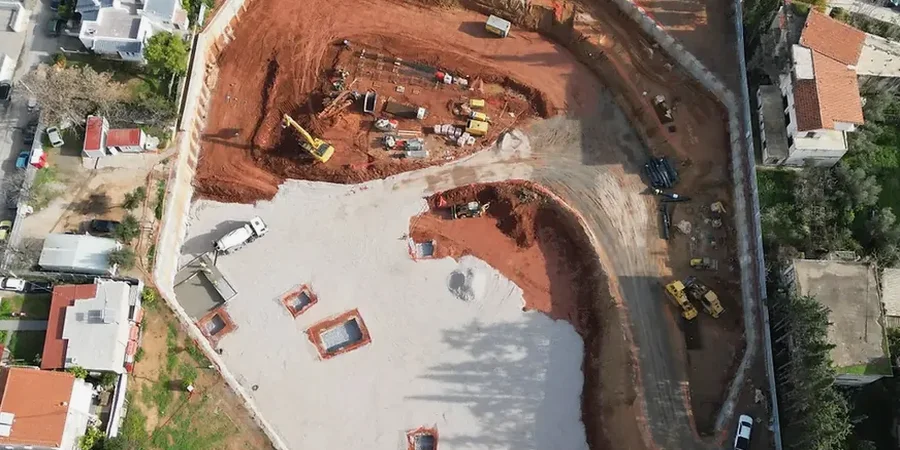
The types of projects that require underground excavation expertise in Escondido are diverse and reflect the city's evolving infrastructure needs. Municipal utility upgrades frequently involve trenchless methods such as microtunneling or pipe jacking beneath roadways, demanding precise geotechnical design of deep excavations to minimize surface disruption. Commercial developments in downtown areas often incorporate multi-level subterranean parking structures that require careful shoring and dewatering design. Hillside residential construction may necessitate cut-and-cover tunnels for access or retaining systems for deep basements. Infrastructure resilience initiatives, including flood control tunnels and underground detention basins, are becoming increasingly common as the region adapts to changing precipitation patterns. Across all these applications, continuous geotechnical excavation monitoring serves as an essential feedback mechanism, allowing engineers to verify design assumptions and adjust construction methods in real time to maintain safety and performance standards.
Escondido's subsurface is dominated by weathered granitic rocks and alluvial deposits that can transition abruptly between competent rock and loose, water-bearing soils. Expansive clay layers in some areas add volume-change risks, while the region's seismic activity requires designs that account for ground shaking and potential fault displacements.
Federal OSHA standards under 29 CFR 1926 Subpart P set baseline requirements for protective systems, soil classification, and competent person duties. California's Cal/OSHA enforces additional, often stricter provisions. Local compliance also involves the California Building Code and City of Escondido permit requirements, including geotechnical report submissions.
Monitoring typically involves a combination of instrumentation such as inclinometers, extensometers, and settlement markers to track ground movement, along with regular visual inspections. Data is collected continuously or at defined intervals and compared against design thresholds to identify potential instability early and guide necessary construction adjustments.
Common projects include utility tunnels using trenchless methods, deep basements and parking structures for commercial developments, hillside access tunnels for residential sites, and flood control infrastructure such as underground detention basins. Each requires tailored geotechnical design and construction approaches based on site-specific conditions.