GEOTECHNICALENGINEERING1
ESCONDIDO
HomeIn-Situ TestingField permeability test (Lefranc/Lugeon)

Field Permeability Testing (Lefranc/Lugeon) in Escondido

Sound ground. Sound decisions.

LEARN MORE

The hydrogeologic contrast between a vineyard site off San Pasqual Valley Road and a hillside parcel in the Harmony Grove area can be stark, even though both sit within Escondido's city limits. One sits on deep alluvial deposits from the San Dieguito River basin, while the other is anchored in decomposed tonalite and fractured granitic bedrock typical of the Peninsular Ranges. When we run field permeability tests in these settings, the Lugeon method often takes center stage in the rock, and the Lefranc test becomes the workhorse in the overlying soils. Understanding which protocol fits the subsurface conditions is what turns a simple infiltration feasibility study into a defensible design parameter for detention basins, retaining wall drains, or deep excavation dewatering systems.

A single Lugeon value without a step-test curve tells you almost nothing about fracture flow regime—laminar, turbulent, dilation, or washout.
Our service areas

Methodology and scope

The most common mistake we encounter in Escondido is assuming that a single packer test result from a weathered zone represents the bulk permeability of the entire borehole. In our experience, fractured metavolcanics near Lake Wohlford can yield Lugeon values that vary by an order of magnitude across just ten vertical feet. To avoid this, we stage the test at multiple depth intervals, isolating zones with pneumatic packers and recording pressure-step data according to Houlsby's criteria. A proper grain size analysis of the cuttings helps confirm whether the fracture infill is silty or clean sand, which directly influences the test interpretation. We also run Lefranc tests in the colluvial mantle using a constant-head or falling-head setup, depending on the anticipated permeability range. The goal is a vertical profile of hydraulic conductivity that the civil engineer can use for slope drainage design, infiltration gallery sizing, and groundwater control planning.
Field Permeability Testing (Lefranc/Lugeon) in Escondido
Technical reference — Escondido

Site-specific factors

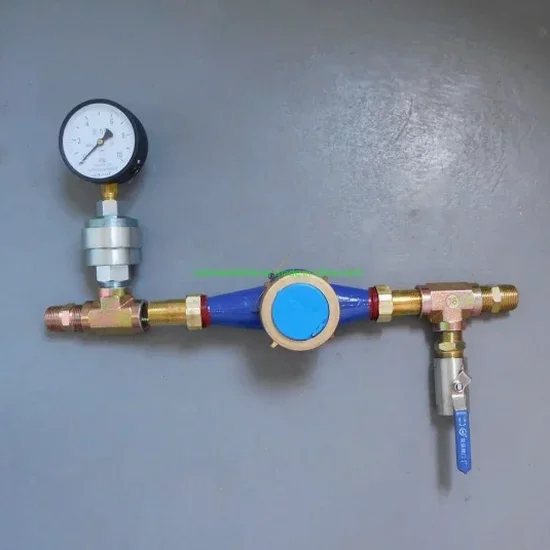
The Lugeon test setup in Escondido's terrain often involves a truck-mounted drill rig positioned on a graded pad, running a wireline system with a down-the-hole hammer to advance through the granitic saprolite. Once competent rock is reached, we flush the hole, install the packer assembly, and connect a calibrated pressure gauge and flow meter at the surface. Overlooking the background groundwater level—which can fluctuate seasonally in fractured rock aquifers—yields a misleading effective pressure and an incorrect Lugeon coefficient. When that happens, the designer might underestimate grout take or overestimate the dewatering capacity, leading to delays during retaining wall construction or basement excavation. The data we deliver includes the step-test curve, flow versus pressure, and an assessment of fracture condition: laminar flow, turbulent flow, dilation, or washout.

Need a geotechnical assessment?

Reply within 24h.

Email: contact@geotechnicalengineering1.com

Applicable standards

ASTM D4630-19 (Standard Test Method for Determining Transmissivity and Storage Coefficient of Low-Permeability Rocks by In Situ Measurements Using the Constant Head Injection Test), USBR Earth Manual Part 2 (Lefranc testing in soils and soft rock), Houlsby (1976) – Routine interpretation of the Lugeon water test, IBC Section 1803.5.5 (Foundation investigations in rock)

Technical parameters

ParameterTypical value
Test TypeLefranc (constant head / falling head) and Lugeon (packer test)
Applicable StratumSoil and weathered rock (Lefranc); fractured rock (Lugeon)
Packer ConfigurationSingle or double pneumatic packer, 2-5 ft test interval
Pressure StagesTypically 5 steps (low-medium-high-medium-low) per Houlsby
Standard ReferenceASTM D4630 for rock mass; USBR Earth Manual for soil
Reported ParameterHydraulic conductivity (cm/s or ft/day) and Lugeon coefficient (Lu)

Common questions

What does a field permeability test cost in Escondido?
When should I use a Lugeon test instead of a Lefranc test?

Use the Lugeon test when you are drilling into fractured rock—granite, tonalite, or metavolcanics—and need a measure of fracture transmissivity for grouting or drainage design. The Lefranc test is more appropriate in soil, weathered rock, or the transition zone, where the medium is more porous and less fractured. Many Escondido hillside projects require both: Lefranc in the colluvial mantle and Lugeon in the underlying bedrock.

How long does a packer test take on site?

A single Lugeon test interval typically takes 60 to 90 minutes to complete, including hole cleaning, packer inflation, and the full pressure-step cycle. If we are testing multiple intervals in the same borehole, the total time depends on the number of zones isolated, but a typical three-interval program in Escondido's tonalite can be finished in half a day.

What do the Lugeon values actually mean for my project?

A Lugeon value of 1 Lu indicates tight, low-permeability rock. Values above 10 Lu suggest open fractures that may require grouting if you are excavating a shaft or need to control groundwater. We also interpret the shape of the pressure-flow curve; a turbulent or washout pattern tells you the fractures are opening under pressure, which is critical information if you are designing a pressure grouting program or evaluating dam foundation conditions.

Location and service area

We serve projects across Escondido and surrounding areas.

View larger map