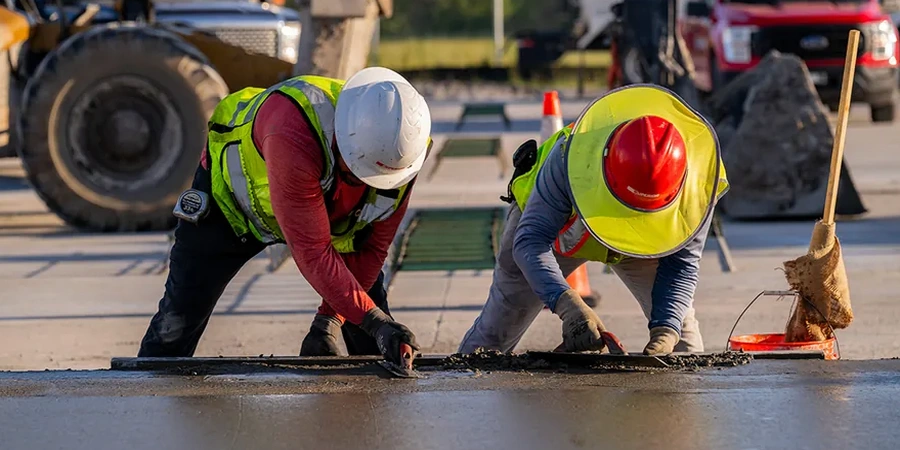
The most expensive mistake we see in North County is a concrete pavement slab poured on untreated expansive clay. Within two seasons, the edges curl, the joints spall, and the owner is looking at a six-figure replacement before the asset even depreciates. In Escondido, where the soil transitions from decomposed granite in the hills to alluvial clay in the valley floor near the 33.1217 latitude, the subgrade can change stiffness by 40% in less than a hundred feet. Our rigid pavement design process starts with that reality. We drill, sample, and test before a single psi of flexural strength is specified, ensuring the slab works with the ground underneath it, not against it. That approach matters when summer pavement temperatures exceed 130°F and the concrete wants to move.
A rigid pavement design that ignores the subgrade's shrink-swell potential in Escondido will fail at the joints before the concrete reaches half its design life.