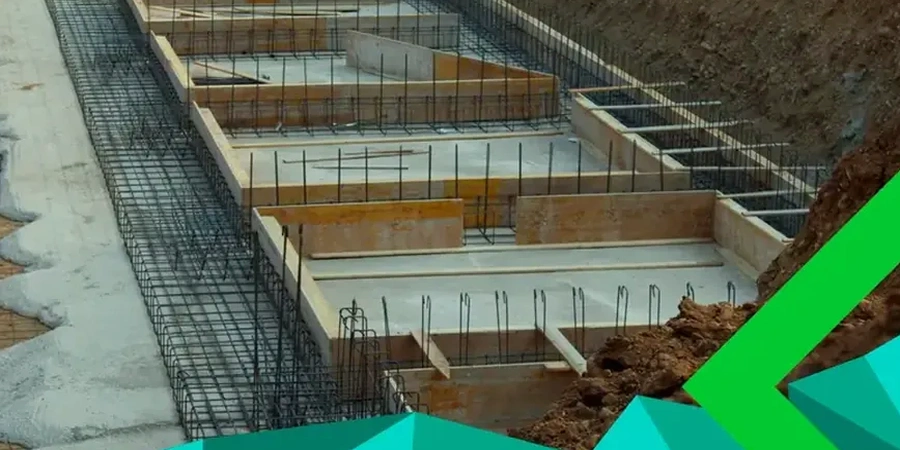
Foundations serve as the critical interface between any structure and the ground beneath it, transferring loads safely into the earth while resisting movement, settlement, and environmental forces. In Escondido, where varied terrain ranges from rocky hillsides to expansive valley soils, selecting the right foundation system is not merely a structural decision but a long-term investment in property safety and performance. This category encompasses the full spectrum of foundation solutions, from shallow spread footings for residential slabs to deep systems like pile foundation design for challenging ground conditions. Understanding local soil behavior, seismic requirements, and regulatory standards ensures that every project, whether a custom home or a commercial building, begins on solid ground.
Escondido sits within a geologically diverse region of San Diego County, characterized by granitic bedrock, decomposed granite, alluvial deposits, and areas of expansive clay. Much of the city lies on weathered granitic soils that can vary dramatically in bearing capacity and drainage characteristics over short distances. Hillside neighborhoods often encounter shallow bedrock or colluvium, while valley floors may present thicker soil profiles with potential for liquefaction or differential settlement. These conditions demand careful geotechnical investigation to determine the appropriate foundation type, depth, and reinforcement. Inadequate assessment of subsurface conditions can lead to cracking, moisture intrusion, or structural distress, making professional evaluation indispensable for both new construction and foundation repair projects.
Regulatory compliance in Escondido falls under the California Building Code (CBC), which incorporates the International Building Code with state-specific amendments. Chapter 18 of the CBC governs soils and foundations, requiring geotechnical reports for most structures and specifying minimum design criteria based on site class and seismic design category. Given Escondido's proximity to active fault systems, including the Elsinore and San Jacinto faults, seismic provisions are particularly stringent. Foundations must be designed to resist lateral forces, uplift, and ground motion amplification, with special inspection often mandated during construction. Local amendments enforced by the City of Escondido Building Division may impose additional requirements for expansive soils, drainage control, and hillside grading, all of which influence foundation selection and detailing.
A wide range of projects in Escondido rely on properly engineered foundations. Single-family homes on level lots typically employ conventional slab-on-grade or raised floor systems, while hillside residences often require stepped footings, caissons, or pile foundation design to reach stable bearing strata. Multistory commercial and mixed-use buildings in downtown Escondido demand deep foundations or mat slabs to handle higher loads and tighter settlement tolerances. Infrastructure such as retaining walls, bridges, and communication towers also depends on specialized foundation engineering to ensure stability under both static and dynamic loading. Even smaller additions like sunrooms or ADUs trigger foundation reviews to verify compatibility with existing structures and compliance with current codes.
In Escondido, slab-on-grade foundations are common for flat residential lots with stable soil, while raised floors suit areas with expansive clay or drainage concerns. Hillside properties often require drilled piers or piles to reach competent bedrock. Commercial projects may use mat foundations or deep pile systems depending on load requirements and seismic demands. A geotechnical report determines the optimal choice.
Escondido's soils range from decomposed granite to expansive clay, each with distinct bearing capacities and movement potential. Granitic soils generally provide good support but can erode if not properly compacted. Expansive clays swell when wet and shrink when dry, causing differential movement. Proper foundation design accounts for these behaviors through reinforcement, moisture control, and sometimes soil treatment to mitigate risks.
Given Escondido's location near active faults, the California Building Code mandates seismic design for all foundations. This includes lateral force resistance, anchorage to prevent sliding or overturning, and detailing for ductility. Site-specific ground motion studies may be required for larger structures. Foundations must accommodate both vertical loads and the horizontal shaking expected during a major earthquake event.
Under the California Building Code and local Escondido amendments, a geotechnical report is required for most new construction, significant additions, and when building on slopes or problematic soils. The report evaluates soil properties, groundwater, and seismic hazards, providing foundation recommendations that the structural engineer must follow. Exceptions may apply for minor accessory structures on favorable sites.