In the hillside communities and expanding developments of Escondido, the stability of natural and engineered slopes is not merely a design consideration — it is a fundamental safety requirement. The category of Slopes & Walls encompasses the specialized geotechnical services required to analyze, design, and reinforce earth structures that resist lateral soil pressures, prevent landslides, and retain critical grade separations. From residential lots carved into the granitic foothills to commercial retaining walls supporting roadway embankments, these services protect property and lives in a region where topography demands rigorous engineering. A comprehensive slope stability analysis forms the backbone of any project, evaluating factors of safety against rotational, translational, or wedge-type failures under both static and seismic conditions.
Escondido’s geology presents a complex interplay of decomposed granite, weathered metavolcanic rock, and alluvial deposits that can vary dramatically over short distances. The presence of expansive clay layers and colluvial soils on steeper terrain creates conditions where water infiltration can rapidly reduce effective stress and trigger instability. Seasonal rainfall, particularly during winter storm events, saturates the near-surface soils and elevates pore water pressures behind retaining structures. This makes in-situ permeability testing an essential component of any slope evaluation, as accurate characterization of drainage characteristics directly influences the design of subsurface dewatering systems and the long-term performance of retention solutions.
Regulatory compliance in Escondido falls under the California Building Code (CBC), which incorporates by reference the International Building Code (IBC) with state-specific amendments for seismic design. Chapter 18 of the CBC governs soils and foundations, while the City of Escondido’s Grading Ordinance adds local requirements for slope setbacks, drainage, and erosion control. All retaining walls over four feet in height, measured from the bottom of the footing to the top of the wall, require engineered design and city review. For slopes exceeding a 2:1 horizontal-to-vertical ratio or with a vertical height greater than 15 feet, a detailed geotechnical investigation is mandatory before permit approval. These regulations ensure that designs account for the site-specific seismic hazard, which includes proximity to the Elsinore and San Jacinto fault zones.
The range of projects requiring these services is broad, spanning public infrastructure, private development, and emergency remediation. Transportation corridors such as Interstate 15 and State Route 78 frequently necessitate mechanically stabilized earth (MSE) walls and soil nail systems to accommodate widening or grade separation. Residential developers constructing on Escondido’s characteristic mesa-and-canyon topography rely on active/passive anchor design to stabilize cut slopes and enable efficient land use. Commercial pad preparation often involves tiered retaining walls with integrated drainage galleries, while aging masonry or crib walls in established neighborhoods may require forensic evaluation and replacement. Even agricultural properties with terraced groves benefit from professional slope assessment to prevent erosion and shallow slumping.
A slope stability analysis is typically required when a proposed cut or fill slope exceeds 15 feet in vertical height, is steeper than a 2:1 horizontal-to-vertical ratio, or is located within a mapped landslide hazard zone. The City of Escondido’s Grading Ordinance also mandates analysis when structures are placed near the top or toe of a slope, ensuring adequate setbacks from potential failure surfaces.
Escondido’s decomposed granite and expansive clay soils can exert significant lateral pressures when saturated, and their strength parameters vary with moisture content. Retaining walls must be designed with robust drainage systems to prevent hydrostatic buildup, and footings often need to extend below the zone of seasonal moisture fluctuation to maintain bearing capacity and resist sliding.
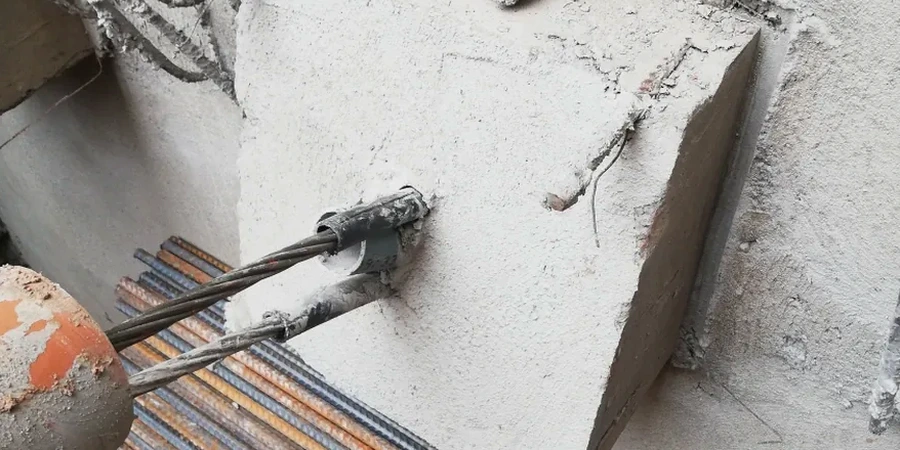
Active anchors are tensioned after installation to immediately apply a predetermined load to the retained structure, reducing deformation. Passive anchors, such as grouted soil nails, develop resistance only as the ground moves and mobilizes bond stress along the anchor length. The choice depends on allowable wall movement, soil type, and whether the system serves a temporary or permanent function.
Yes, the California Building Code requires retaining walls to be designed for seismic earth pressures in addition to static loads. The design must consider the site’s seismic design category and peak ground acceleration, which in Escondido can be influenced by nearby active faults. Walls supporting critical facilities or exceeding six feet often require more rigorous pseudo-static or deformation-based analyses.