A contractor out by the I-15 corridor hit a layer of silty sand that just didn’t pump right. The material looked fine in the cut, but it was holding water and segregating under compaction. We ran a full grain size distribution—sieve stack plus hydrometer—and the fines content came back at 28 percent. That changed the USCS classification from SP-SM to SM and forced a switch in the moisture conditioning plan. In Escondido, where alluvial deposits transition from coarse channel gravels to overbank silts within half a mile, skipping the hydrometer portion of grain size analysis means you’re guessing on the fines fraction. Our lab runs ASTM D422 under one roof, so the same technician handles the wash, the sieve stack, and the 24-hour sedimentation reading.
A sieve-only curve can overestimate permeability by a factor of ten when fines exceed 15 percent—something we see regularly in Escondido’s basin silts.
Scope of work
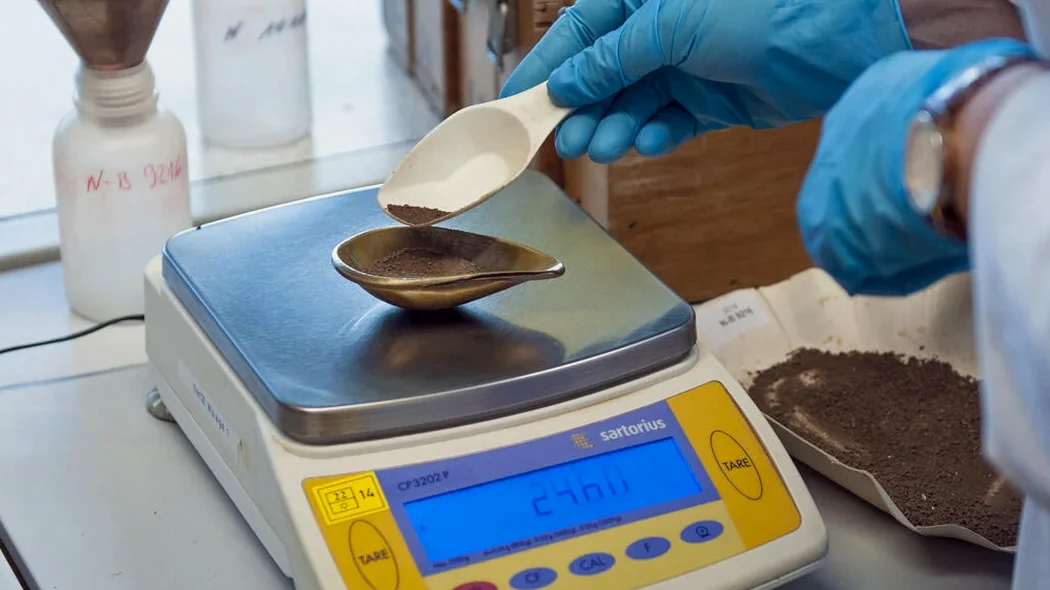
ASTM D422 is the backbone of every grading report we issue for Escondido projects. The standard covers the full curve—gravel, sand, silt, and clay-size particles—using a combination of mechanical sieves and a 152H hydrometer calibrated to 20°C. We dry-prep the sample, run it through a No. 200 wash, oven-dry the retained fraction, then shake a stack from 3 inch down to 75 micron. The minus-200 material goes into a sedimentation cylinder with sodium hexametaphosphate, and we read the hydrometer at 15, 30, 60, 120, and 1440 minutes. Temperature corrections are logged every reading. For Escondido’s decomposed granite residuum east of Bear Valley Parkway, the hydrometer curve often reveals 12–18 percent clay that site crews miss when they rely on a simple wash. The combined plot gives us D10, D30, D60, and a defensible coefficient of uniformity that earthwork inspectors can take straight to the compaction spec.