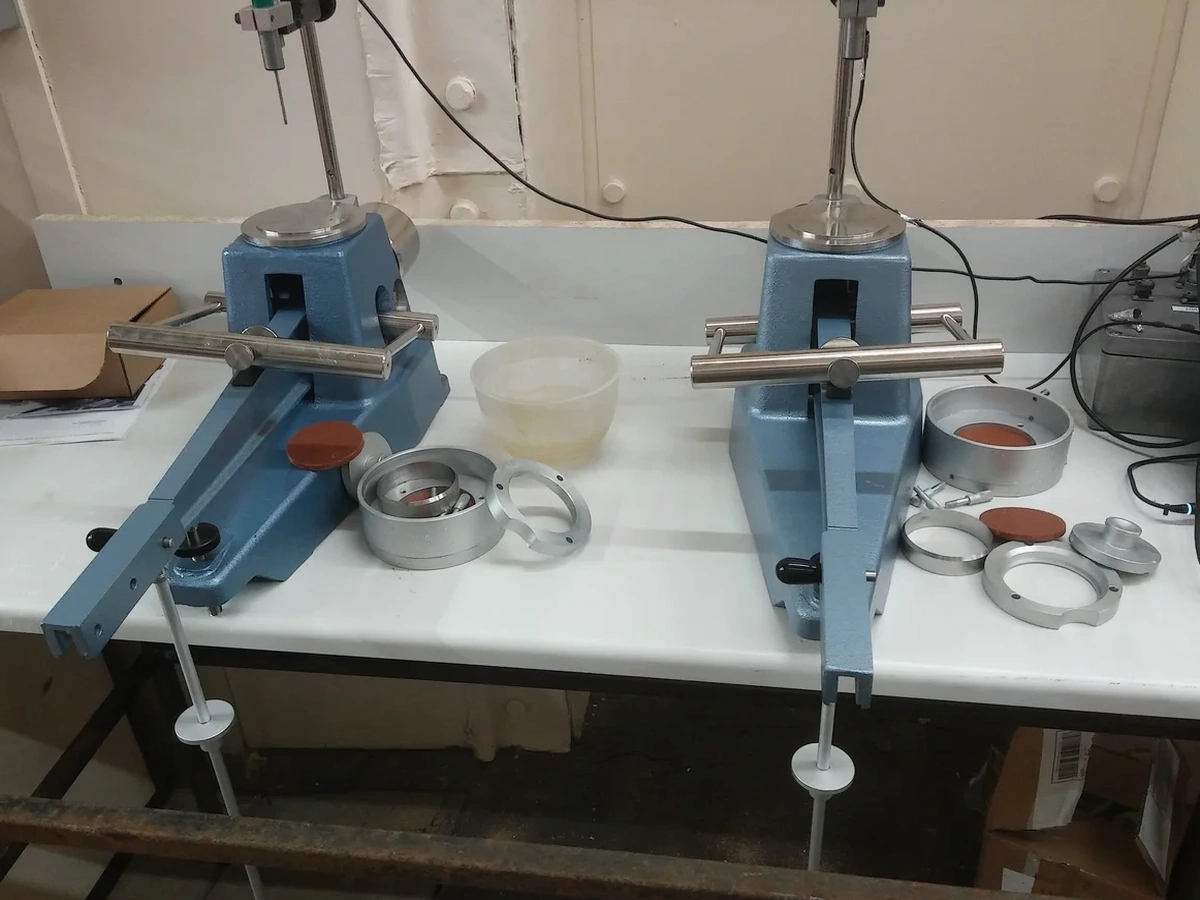
Geotechnical laboratory testing forms the analytical backbone of any well-designed construction or remediation project in Escondido. This category encompasses the physical characterization of soil and rock specimens recovered from subsurface explorations, transforming field samples into quantifiable engineering parameters. In a region where expansive clay, decomposed granite, and alluvial deposits frequently coexist within a single parcel, laboratory data becomes indispensable for predicting how the ground will behave under structural loads, fluctuating moisture, and seismic excitation. Without precise laboratory-derived values for strength, compressibility, permeability, and gradation, even the most thorough field investigation remains incomplete, leaving foundation design, slope stability assessments, and earthwork specifications vulnerable to costly assumptions.
Escondido’s geological setting directly shapes the laboratory testing priorities for local projects. The city straddles the Peninsular Ranges batholith, with deeply weathered granitic rocks known locally as grus or decomposed granite mantling hillside terrain, while valley floors contain Holocene-age alluvium interbedded with clay lenses. Many residential subdivisions and commercial corridors sit atop the Las Posas or Olivenhain series soils, which exhibit moderate to high expansion potential. Laboratory determination of Atterberg limits, expansion index, and grain size analysis (sieve + hydrometer) becomes critical in these settings, as the proportion of fines directly influences both shrink-swell behavior and drainage characteristics. Additionally, the proximity of the Elsinore Fault Zone means that dynamic soil properties evaluated through cyclic triaxial or resonant column testing may be required for critical facilities subject to the California Building Code’s seismic provisions.
Regulatory compliance in Escondido operates under a layered framework of national, state, and local standards. All laboratory procedures must conform to ASTM International methods, with specific test designations governing everything from moisture content (ASTM D2216) to unconsolidated-undrained triaxial compression (ASTM D2850). The California Building Code (CBC), based on the International Building Code with state-specific amendments, dictates the geotechnical investigation scope and acceptance criteria referenced in structural design. For public works and grading operations within city limits, the Escondido Municipal Code and the City’s Standard Specifications for Public Works Construction, often termed the Greenbook, may prescribe minimum testing frequencies and reporting formats. Environmental assessments involving potentially contaminated soils will additionally follow SW-846 methods promulgated by the U.S. EPA, particularly for waste characterization and disposal profiling.
The range of project types demanding comprehensive laboratory programs in Escondido is broad. Residential hillside developments on decomposed granite require consolidation and direct shear testing to validate cut-and-fill slope designs and retaining wall backfill parameters. Commercial infill projects in the downtown corridor, where older alluvium may contain undocumented fill, rely on laboratory compaction curves and R-value testing to support pavement structural sections and building pad certification. Public infrastructure improvements, including stormwater detention basins and sewer trunk lines, necessitate permeability testing and chemical analysis of soil aggressivity toward concrete and steel. Even single-family accessory dwelling units, which have proliferated under recent state housing mandates, benefit from simplified laboratory programs that confirm bearing capacity and corrosion potential, safeguarding the investment against differential settlement and premature foundation deterioration.
Typical residential testing includes moisture content, dry density, Atterberg limits, expansion index, and direct shear or unconfined compression for foundation design. If expansive soils are suspected, a particle size analysis including hydrometer may be needed to quantify clay content. Corrosivity testing for sulfate and chloride is also common to specify appropriate concrete and reinforcement protection per California Building Code requirements.
Basic index tests such as moisture content and Atterberg limits can be completed within three to five business days. Consolidation and direct shear tests typically require seven to ten days due to their time-dependent nature. Comprehensive programs involving multiple test types may extend to two or three weeks, depending on the laboratory’s current workload and the soil type.
The primary standards include ASTM D422 for particle size analysis, ASTM D4318 for Atterberg limits, ASTM D2435 for one-dimensional consolidation, ASTM D3080 for direct shear, and ASTM D2850 or D4767 for triaxial compression. The California Building Code references these ASTM methods directly, and the City of Escondido may also invoke Caltrans test methods for certain public works projects.
Field observations and in-situ tests provide valuable qualitative data, but they cannot directly measure engineering properties such as shear strength, compressibility, or expansion potential. Laboratory testing under controlled conditions quantifies these parameters using undisturbed or remolded specimens, allowing the geotechnical engineer to perform bearing capacity calculations, settlement analyses, and slope stability modeling with confidence rather than relying solely on empirical correlations.