GEOTECHNICALENGINEERING1
ESCONDIDO
HomeGeophysicsSeismic tomography (refraction/reflection)

Seismic Tomography: Refraction & Reflection Testing in Escondido

Sound ground. Sound decisions.

LEARN MORE

Escondido’s expansion from a quiet ranching valley into a bustling North County hub brought with it a unique set of subsurface challenges—much of the city sits atop ancient alluvial deposits and deeply weathered granitic bedrock of the Peninsular Ranges. When the Vineyard at Escondido and other large-scale developments broke ground, engineers quickly realized that standard borings alone couldn’t map the erratic depth to competent rock across the 37-square-mile city. This is where seismic tomography (refraction/reflection) became invaluable: a non-invasive method to image the subsurface in two or three dimensions, revealing hidden paleochannels and fractured zones before a single footing is poured. For projects near the seismically active Elsinore fault zone, understanding wave propagation velocities isn’t just academic—it defines the entire foundation strategy.

Mapping the decomposed granite-to-bedrock interface with seismic tomography prevents the costly surprise of finding unrippable material mid-excavation.
Our service areas

Methodology and scope

The decomposed granite that characterizes much of Escondido’s geology presents a tricky intermediate geomaterial: it can look like soil but retain rock-like seismic velocities above 1,200 m/s. Our refraction surveys map these transitions across the site, distinguishing rippable weathered material from competent rock that requires blasting. Reflection methods, on the other hand, excel at imaging deeper stratigraphy—picking out the contact between the Quaternary alluvium and the Santiago Peak Volcanics that underlie the eastern edges of the city. We combine these with MASW surveys when the project requires a Vs30 profile for IBC site classification, ensuring the dynamic properties match the static model. The data is processed through iterative tomographic inversion, with ray coverage carefully checked to avoid artifacts in the velocity model. What matters most in Escondido is the lateral resolution: the terrain shifts from soft floodplain deposits along Escondido Creek to hard rock in less than a quarter mile, and a single borehole every hundred feet simply misses that transition.
Seismic Tomography: Refraction & Reflection Testing in Escondido
Technical reference — Escondido

Site-specific factors

The most common mistake we see in Escondido is relying solely on a handful of borings to characterize a site with highly variable weathering. A contractor hits what they think is bedrock at 15 feet, bases the entire grading plan on that depth, then discovers the true competent rock is another 20 feet down on the opposite corner—a half-million-dollar change order in the making. Seismic tomography eliminates this guesswork. The velocity model shows exactly where the 1,500 m/s contour sits across the entire site. Another frequent oversight: not accounting for the velocity contrast between dry and saturated alluvium. A refraction survey run in late summer can give a significantly different shallow velocity profile than the same survey after winter rains, and the foundation design needs to be solid for the site’s worst-case moisture condition.

Need a geotechnical assessment?

Reply within 24h.

Email: contact@geotechnicalengineering1.com

Explanatory video

Applicable standards

ASTM D5777-18 (Standard Guide for Using the Seismic Refraction Method), ASCE 7-22 (Minimum Design Loads - Site Classification), IBC 2021 Chapter 16 (Structural Design - Site Class Definitions), ASTM D7128-18 (Standard Guide for Using the Seismic Reflection Method)

Technical parameters

ParameterTypical value
Survey methodP-wave refraction, S-wave refraction, reflection
Geophone spacing1 to 5 m typical; 0.5 m for high-resolution
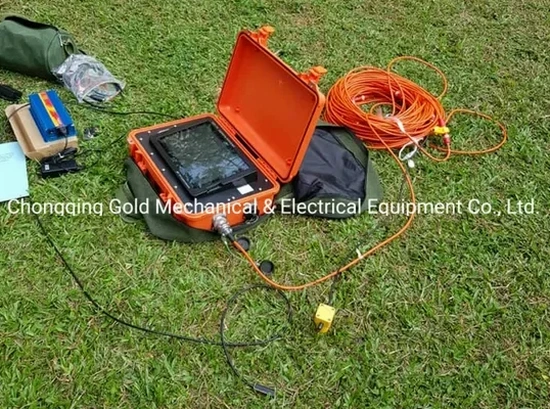
Energy sourceSledgehammer, accelerated weight drop, or Betsy gun
Maximum depth of investigation30 to 50 m (refraction); >100 m (reflection)
Data processingTomographic inversion (SeisImager, Rayfract)
Output deliverables2D/3D velocity models, rippability maps, report
StandardASTM D5777-18

Common questions

How deep can a seismic refraction survey see in the decomposed granite typical of Escondido?

In the weathered granitic terrain common east of I-15, a 115-meter spread with a good energy source reliably images down to 25-30 meters. The key is the velocity contrast: once the granite weathers to grus, the P-wave velocity drops below 1,000 m/s, creating a strong refractor at the fresh rock contact. For deeper targets, reflection profiling is the better tool.

What does a seismic tomography survey cost for a typical 1-acre site in Escondido?
Can seismic methods replace borings for foundation design?

No—they complement each other. Seismic tomography gives you the continuous spatial picture of the subsurface geometry and material stiffness, but it doesn’t provide a physical sample for classification or strength testing. The most effective site investigation in Escondido pairs a few strategically placed borings (with SPT and lab testing) with a grid of seismic lines that tie the point data together across the entire site.

Location and service area

We serve projects across Escondido and surrounding areas. More info.

View larger map