GEOTECHNICALENGINEERING1
ESCONDIDO
HomeFoundationsPile foundation design

Pile Foundation Design for Escondido’s Variable Sediments

Sound ground. Sound decisions.

LEARN MORE

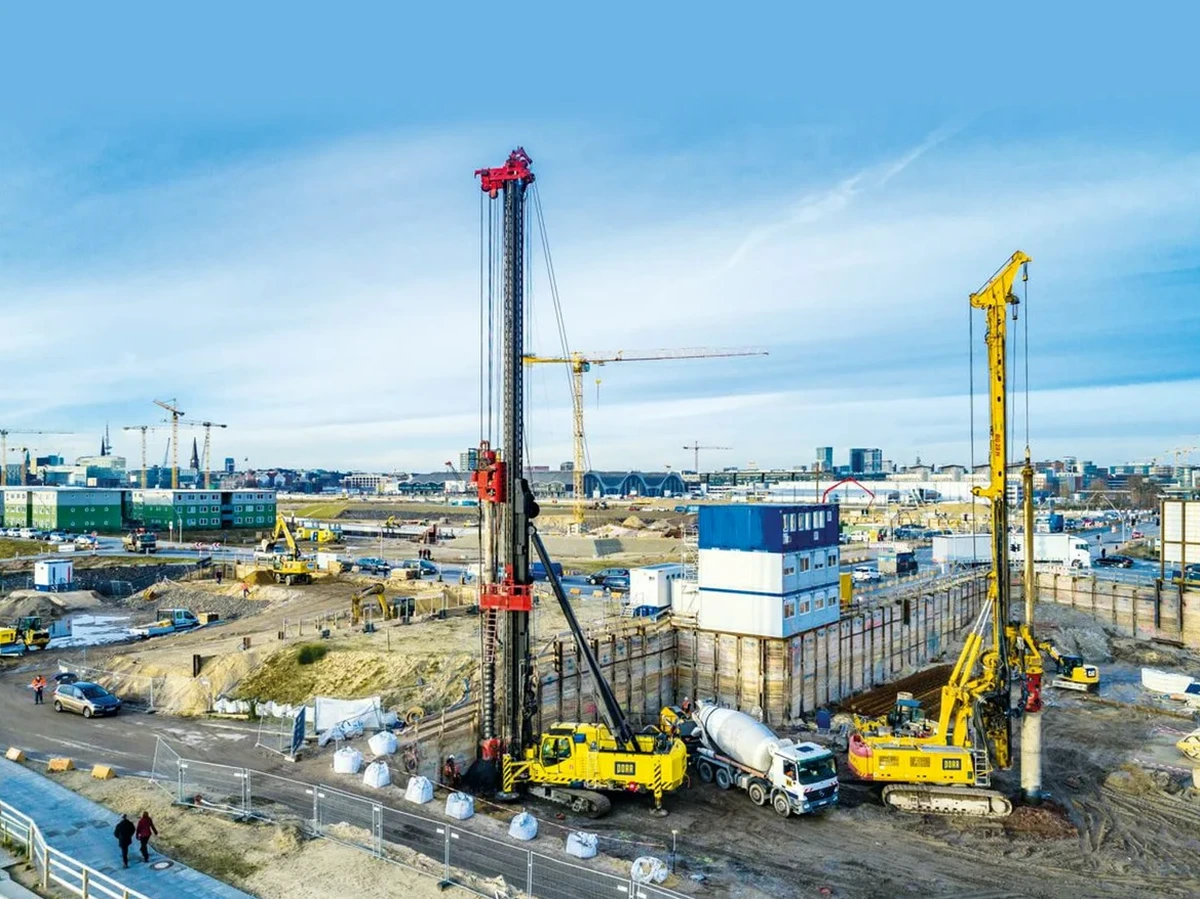
Escondido sits at roughly 684 feet elevation, tucked into a valley where alluvial deposits meet weathered granitic bedrock. The 2019 swarm near the San Jacinto fault was a reminder that even moderate shaking can amplify in soft soils. For any mid-rise or heavy commercial project here, shallow footings often hit refusal or encounter unpredictable compressible layers within the first 15 feet. That is when a pile foundation design becomes the logical path. We run the axial and lateral analysis using site-specific SPT blow counts and lab index data, then cross-check group efficiency under IBC Chapter 18 and ASCE 7-22. If the upper strata show liquefiable silts, we pair the design with a liquefaction assessment to calibrate depth of fixity and downdrag, keeping the structural load path intact.

A pile designed solely on minimum tip elevation without accounting for Escondido's colluvial creep can lose lateral support within a single rainy season.
Our service areas

Pile Foundation Design for Escondido’s Variable Sediments
Technical reference — Escondido

Site-specific factors

A mistake we see repeatedly in Escondido is specifying pile length based on a single boring log, ignoring the lensing common in the valley's alluvial fan deposits. A pile that tacks 2 feet into what looks like weathered granite can end up punching through a decomposed seam and losing end bearing overnight. Another error: designing for axial load only and treating lateral resistance as an afterthought. In the Escondido Hills, where cut-and-fill transitions are steep, lateral creep from fill settlement imposes bending moments that exceed the structural capacity of unreinforced sections. We always run a lateral deflection check under the design seismic case, and if the top 10 feet show soft clay, we specify a permanent casing or an oversized upper section to handle the moment arm.

Need a geotechnical assessment?

Reply within 24h.

Email: contact@geotechnicalengineering1.com

Explanatory video

Applicable standards

IBC 2021 Chapter 18 – Soils and Foundations, ASCE 7-22 Section 12.13 – Foundation Design, ASTM D1586-18 – Standard Penetration Test, ACI 543R-12 – Guide for Design of Drilled Shafts, NCEER-97-0022 – Liquefaction Resistance (Youd & Idriss)

Technical parameters

ParameterTypical value
Design standardIBC 2021 / ASCE 7-22 Chapter 18
Typical pile typeDriven H-pile, CIDH drilled shaft, micropile
Bearing stratumDecomposed granite, dense alluvium
Lateral analysis methodLPILE / COM624P (p-y curves)
Settlement criteria< 1 inch total, < 0.5 inch differential
Liquefaction checkNCEER method, fines-corrected SPT
Concrete specACI 543R-12 for drilled shafts
Steel specASTM A572 Grade 50 typical

Common questions

How deep do piles typically go in Escondido before reaching competent rock?

It varies block by block. In the downtown area along Valley Parkway, weathered granite can appear at 25 to 40 feet. Up in the hills east of I-15, residual soil overlies decomposed rock and piles may extend 50 to 70 feet. We log every boring personally to confirm refusal.

Do you handle both driven piles and drilled shafts?

Yes. Driven H-piles work well in the denser alluvial terraces where vibration is acceptable. We specify drilled cast-in-drilled-hole shafts for sites near existing structures or where noise and vibration must be minimized.

What lateral load capacity can I expect from a 24-inch drilled shaft?

In Escondido's stiff alluvium, a 24-inch shaft with 1% reinforcement can typically resist 15 to 25 kips of lateral load at 0.5-inch deflection. The exact value depends on the near-surface soil modulus and the groundwater level at the time of construction.

Is a pile load test always required?

IBC 2021 requires a load test when the design capacity exceeds 50 tons or when site conditions are highly variable. In most Escondido commercial projects we recommend at least one static compression test to validate the geotechnical parameters used in design.

What is the typical cost range for a pile foundation design package?

Location and service area

We serve projects across Escondido and surrounding areas.

View larger map