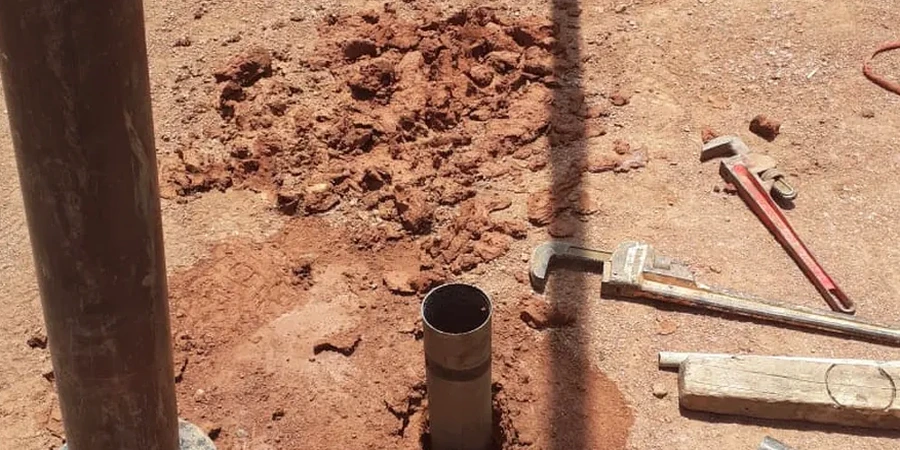
In-situ testing forms the backbone of reliable geotechnical engineering in Escondido, providing direct measurements of soil and rock properties without disturbing their natural state. This category encompasses a range of field investigation methods that evaluate subsurface conditions critical for foundation design, slope stability analysis, and earthwork quality control. For a city experiencing steady residential and commercial growth, these tests deliver the data engineers need to mitigate risks associated with expansive soils, variable bedrock, and seismic activity. By obtaining parameters like strength, density, and permeability directly on site, project teams avoid the delays and potential inaccuracies of laboratory-only approaches, ensuring that designs reflect actual ground behavior.
Escondido's geology presents unique challenges that make thorough in-situ investigation essential. The area sits within the Peninsular Ranges geomorphic province, characterized by granitic and metasedimentary bedrock overlain by residual and alluvial soils. Many hillside developments encounter shallow, weathered granite with varying degrees of decomposition, while flatter regions near Escondido Creek feature compressible alluvium and colluvium deposits. Expansive clay soils, common in the region, undergo significant volume changes with seasonal moisture fluctuations, posing a direct threat to foundations and pavements. In-situ testing helps identify these problematic layers and quantify their behavior under load, guiding appropriate ground improvement or foundation selection.
Regulatory compliance in Escondido falls under the California Building Code, which adopts the International Building Code with state-specific amendments. These standards mandate geotechnical investigations for most construction projects, referencing ASTM International procedures for field testing. For instance, ASTM D1556 governs the field density test (sand cone method), a widely used technique for verifying compaction in structural fill and subgrade materials. Additional ASTM standards apply to penetration testing, vane shear, and plate load tests. The City of Escondido's Engineering Department also enforces grading ordinances that require density testing during earthwork operations, ensuring that fills achieve specified compaction levels before construction proceeds.
Projects across Escondido routinely require in-situ testing services, from single-family home additions on sloping lots to large-scale subdivisions and commercial developments. Roadway expansions, utility trench backfills, and retail centers in the city's growing commercial corridors depend on field density tests to validate compaction and prevent future settlement. Hillside retaining walls and landslide repair projects use shear strength tests to confirm stability, while school and hospital construction demands comprehensive site characterization. Even smaller landscape and pool projects benefit from density verification when cuts and fills are involved. The sand cone density method remains a practical choice for these applications, offering direct measurement of in-place soil density without complex equipment.
In-situ testing measures soil and rock properties directly in the ground, preserving natural stress conditions, moisture content, and fabric that are altered during sampling and transport. This approach provides immediate results for time-sensitive construction decisions and captures behaviors like dilatancy or pore pressure response that laboratory tests may miss, making it essential for accurate geotechnical characterization in Escondido's variable geology.
Residential projects in Escondido typically require field density tests for compaction verification during grading, along with penetration resistance tests like the Standard Penetration Test or dynamic cone penetrometer for foundation bearing capacity evaluation. Expansive soil assessments often use moisture-density relationships established through field sampling and in-place density measurements to predict heave potential beneath slabs and footings.
Escondido's mix of granitic bedrock, alluvial deposits, and expansive clays demands tailored testing strategies. Weathered granite zones may require downhole geophysical methods to map rock rippability, while soft alluvium benefits from vane shear tests for undrained strength. Expansive clay layers are best characterized through moisture content profiling and density testing to assess compaction and potential volume change.
ASTM D1556 outlines the sand cone method for determining in-place density of soil, while ASTM D6938 covers nuclear gauge testing. Both are accepted under the California Building Code for compaction verification. ASTM D698 and D1557 establish laboratory compaction curves that field results are compared against, typically requiring 90 to 95 percent relative compaction for structural fill in Escondido grading projects.