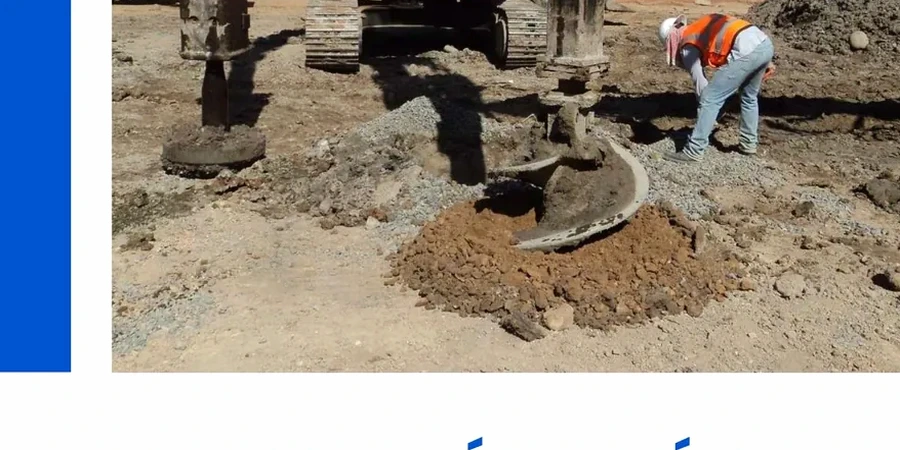
Ground improvement encompasses a suite of geotechnical techniques designed to enhance the engineering properties of soil and rock beneath a site, ensuring stability, controlling settlement, and mitigating seismic risks. In Escondido, California, where development expands into hillside terrains and valley infills, the demand for reliable ground improvement is critical. This category covers everything from densification of loose sands to reinforcement of soft clays, providing the foundational support necessary for safe, long-lasting infrastructure. Without these interventions, problematic soils can lead to differential settlement, slope instability, or even catastrophic failure during an earthquake, making ground improvement a non-negotiable phase in the design and construction process for many local projects.
Escondido's geology presents a complex tapestry that directly influences the need for specialized ground treatment. The city lies within the Peninsular Ranges geomorphic province, characterized by granitic bedrock of the Southern California Batholith, overlain in many areas by alluvial deposits, colluvium, and artificial fill. The valley floors often contain layers of loose, young alluvium with a high potential for liquefaction, while hillside cuts can expose weathered granite that transitions from hard rock to completely decomposed, soil-like material. This variability means a single site can host competent rock, expansive soils, and compressible fills within a small footprint, demanding a tailored approach to ground improvement rather than a one-size-fits-all solution.
Geotechnical practice in Escondido is governed by the California Building Code (CBC), which adopts and amends the International Building Code (IBC) with state-specific chapters on soils and foundations. Chapter 18 of the CBC, along with referenced standards from ASCE 7 and the California Geological Survey's guidelines, mandates rigorous site characterization and, where applicable, ground improvement to meet seismic performance criteria. For projects in seismically active zones, which cover much of Southern California, these codes require explicit evaluation of liquefaction potential and, if the risk is deemed unacceptable, the implementation of a ground improvement program designed by a licensed geotechnical engineer. The City of Escondido's Engineering Department may also enforce additional local grading ordinances that control compaction and fill placement.
This category of work is essential across a broad spectrum of projects. Commercial and industrial buildings on slab-on-grade foundations often require improvement of the subgrade to meet stringent floor flatness and loading requirements. Residential subdivisions cutting into hillsides rely on ground improvement to stabilize both cut and fill slopes. Critical infrastructure, such as bridges, retaining walls, and water tanks, demands the highest level of seismic resilience, frequently achieved through deep ground treatment. For sites with a high liquefaction potential, a targeted solution like vibrocompaction design using seismic refraction can be employed to densify granular soils and mitigate the threat of earthquake-induced settlement, ensuring the structure remains safe and serviceable.
The primary goals are to increase bearing capacity, control total and differential settlement, and mitigate seismic hazards like liquefaction. Given Escondido's mix of loose alluvial soils, weathered granite, and artificial fill, ground improvement ensures a stable, uniform subgrade that can safely support structural loads and resist earthquake-induced ground failure as required by the California Building Code.
Escondido's geology ranges from hard granitic bedrock to soft, liquefiable valley sediments. The chosen method depends on the soil type: granular soils prone to liquefaction are often treated with densification techniques like vibrocompaction, while soft clays might require preloading, deep soil mixing, or stone columns to accelerate consolidation and increase strength, all dictated by the subsurface profile.
Ground improvement becomes mandatory when a geotechnical investigation identifies a hazard that cannot be economically mitigated by foundation design alone. Under CBC Chapter 18 and ASCE 7, this is typical for sites with liquefiable soils, high-expansive clays, or uncontrolled fill where the predicted settlement or seismic performance does not meet the project's required risk category and performance criteria.
Projects on valley floors with high groundwater and loose alluvium, hillside developments with deep fills, and any essential facility like hospitals or fire stations commonly require ground improvement. Commercial warehouses, residential subdivisions, and infrastructure like bridges and retaining walls also frequently need treatment to meet settlement tolerances and seismic safety standards.