GEOTECHNICALENGINEERING1
ESCONDIDO
HomeLaboratoryLaboratory CBR test

Laboratory CBR Testing for Pavement Design in Escondido

Sound ground. Sound decisions.

LEARN MORE

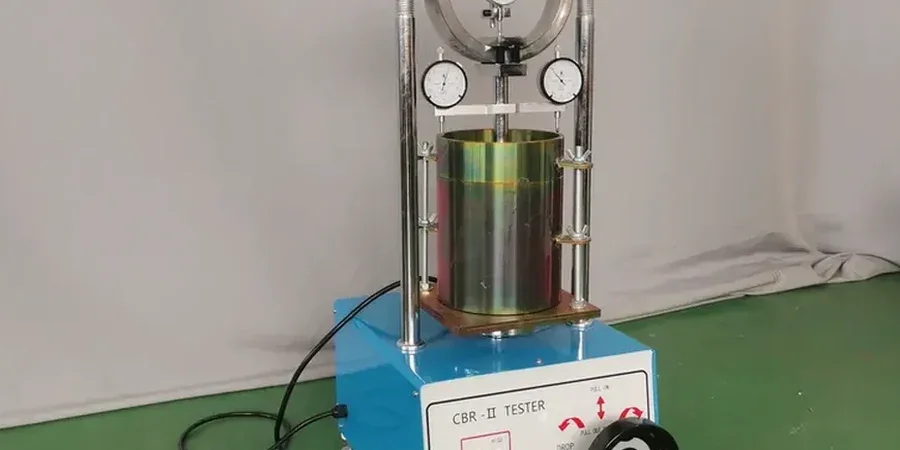
The hydraulic loading frame in our lab applies a steady 0.05 inches per minute to a compacted soil specimen. A proving ring and dial gauge capture penetration resistance at 0.1-inch increments. In Escondido, where decomposed granite and alluvial silts meet urban infill, this test tells us exactly how much load the subgrade can carry before it shears. We run the Laboratory CBR test on samples compacted to the moisture and density specs you expect on site, so the number on the report reflects real field conditions, not idealized lab curves. For pavement projects that cross flexible pavement design thresholds, having a local lab that understands Escondido's mixed geology means fewer overdesign surprises and fewer contractor change orders down the road.

A soaked CBR of 4 versus 6 can remove two inches of asphalt from a pavement section in Escondido without shortening its design life.
Our service areas

Methodology and scope

Escondido sits at roughly 684 feet above sea level, with summer pavement temperatures that routinely exceed 140 degrees Fahrenheit. Those thermal cycles soften asphalt binders and push more stress into the underlying base and subgrade layers. A Laboratory CBR test on a specimen soaked for 96 hours simulates the worst-case saturated condition after winter rains, which is the scenario that governs pavement thickness in San Diego County. We compact the material in a 6-inch mold using a modified Proctor effort, then measure penetration resistance against a standard crushed-stone reference. Typical Escondido subgrades yield soaked CBR values between 3 and 12 percent; granular bases often reach 40 to 80 percent. These numbers feed directly into layer thickness calculations: lower CBR means thicker aggregate base, and the difference between a CBR of 4 and a CBR of 6 can remove two inches of asphalt from the cross-section without sacrificing design life.
Laboratory CBR Testing for Pavement Design in Escondido
Technical reference — Escondido

Local considerations

Escondido's growth after the 1950s pushed residential streets and commercial parking lots onto former citrus groves and seasonal creek terraces. The historical result: a patchwork of well-drained sandy loams next to pockets of expansive clay and undocumented fill. A pavement section designed on a borrowed CBR value often fails first at the interface between two different soil zones. The Laboratory CBR test on remolded samples gives us a repeatable strength index for each distinct material layer. When we test at the expected field density and moisture content, the number we report can be plugged directly into the AASHTO 93 pavement design equation. Skipping this step in Escondido means risking differential heave under the asphalt after the first wet winter, and that repair cost always dwarfs the price of a few CBR specimens run during the design phase.

Need a geotechnical assessment?

Reply within 24h.

Email: contact@geotechnicalengineering1.com

Applicable standards

ASTM D1883-21, AASHTO T 193-22, Caltrans Section 39, ASTM D1557-12e1 (Modified Proctor)

Technical parameters

ParameterTypical value
Specimen diameter6 in (152 mm) standard mold
Compaction methodModified Proctor per ASTM D1557
Soaking period96 hours submerged
Penetration rate0.05 in/min continuous
Reference standardCrushed California limestone
Surcharge weight10 lb annular surcharge per ASTM D1883
Data points recordedPenetration at 0.1 and 0.2 in

Frequently asked questions

How long does a Laboratory CBR test take from sampling to report?

Standard turnaround is 5 to 7 business days. The 96-hour soak is the pacing step. We can expedite to 4 days for tight bid schedules if you let us know when the samples arrive at our receiving window.

What does a Laboratory CBR test cost for a typical Escondido project?

A single-point soaked CBR with Proctor correlation runs between US$120 and US$230, depending on whether you need one or three compaction points. Most pavement designs require a three-point curve, which falls at the upper end of that range.

Do I need a CBR test if I already have an R-value from a stabilometer?

The R-value test and the Laboratory CBR test measure different responses. Caltrans flexible pavement design uses R-value, but most municipal and private projects in Escondido follow AASHTO methods that require a soaked CBR. We can run both if your spec requires correlation, but one does not replace the other automatically.

Location and service area

We serve projects across Escondido and surrounding areas.

View larger map