GEOTECHNICALENGINEERING1
ESCONDIDO
HomeGround improvementStone column design

Stone Column Design for Ground Improvement in Escondido, CA

Sound ground. Sound decisions.

LEARN MORE

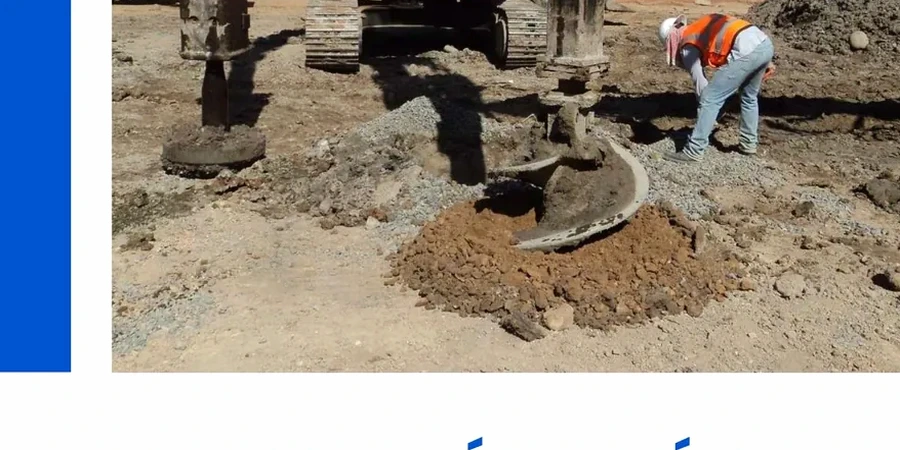
Designing stone columns in Escondido starts with understanding how the vibratory probe and bottom-feed system interact with decomposed granite and alluvial sediments. The equipment’s amperage draw and penetration rate tell us more about the subsurface than most people realize—especially when working across the transition zones between the granitic foothills and the Escondido Creek floodplain. In this part of northern San Diego County, the colluvial deposits near Dixon Lake behave very differently from the sandy silts found near the intersection of Centre City Parkway and Valley Parkway. Effective stone column design in Escondido relies on interpreting these local subtleties alongside proper laboratory classification. Our approach integrates field data with grain size analysis to confirm that the native soils are compatible with the vibro-replacement process before committing to a full production layout.

A properly designed stone column grid in Escondido’s alluvial soils can reduce total settlement by 50 to 70 percent while providing a reliable drainage path for excess pore pressure dissipation during seismic events.
Our service areas

Methodology and scope

The geology of Escondido presents a distinct challenge for ground improvement: the contact between the Cretaceous-age Peninsular Ranges batholith and the Quaternary alluvium filling the Hidden Valley basin creates sharp lateral changes in soil stiffness over very short distances. Groundwater in the Escondido Creek corridor is often encountered at depths between 8 and 20 feet, which directly impacts the installation method and the required stone column diameter. A proper Escondido stone column design must account for the site-specific seismic demands per ASCE 7-22, particularly the short-period spectral acceleration values that govern liquefaction triggering analysis in the creek-proximal saturated zones. The crushed stone specification—typically a clean, angular aggregate with a friction angle above 40 degrees—is verified through laboratory compaction testing before mobilization. Single-column load tests in Escondido’s cohesive alluvium frequently show bearing capacities exceeding 40 kips per column when installed with proper confinement. The drainage function of the columns also reduces post-seismic settlement, a critical factor for structures within the City of Escondido’s jurisdiction where performance-based design objectives are increasingly common.
Stone Column Design for Ground Improvement in Escondido, CA
Technical reference — Escondido

Local considerations

In Escondido, we often see projects where site investigation borings stop at 20 feet but the compressible alluvium extends below 40 feet—creating a situation where partial-depth stone columns float in the soft layer, and the building experiences differential settlement within the first three years. Another pattern worth highlighting is the underestimation of lateral confinement near property lines; without sufficient overburden or a reinforced perimeter, the columns near the edge of the treatment zone can bulge outward during loading, compromising the entire grid’s performance. The presence of organics in the old agricultural land east of downtown Escondido—remnants of the citrus and avocado groves that once dominated the valley—can also degrade stone column behavior. Organic content above 2 percent typically requires a modified design approach or a switch to rigid inclusions. Ignoring the groundwater fluctuation between summer and winter months in Escondido Creek’s influence zone leads to overly optimistic settlement predictions that fail to hold up during wet years.

Need a geotechnical assessment?

Reply within 24h.

Email: contact@geotechnicalengineering1.com

Applicable standards

ASCE 7-22 Minimum Design Loads and Associated Criteria for Buildings and Other Structures, ASTM D1586-18 Standard Test Method for Standard Penetration Test (SPT) and Split-Barrel Sampling of Soils, ASTM D2487-17 Standard Practice for Classification of Soils for Engineering Purposes (Unified Soil Classification System), IBC 2024 Chapter 18 Soils and Foundations, FHWA-NHI-16-072 Ground Improvement Methods

Technical parameters

ParameterTypical value
Typical column diameter24 to 42 inches
Replacement ratio (as)10% to 35%
Aggregate friction angle (φ’)40° to 45°
Maximum treatment depthUp to 60 feet
Applicable soil typesSoft clays, silts, loose sands
Grid patternTriangular or square
Post-treatment settlement reduction50% to 70%

Frequently asked questions

How much does a stone column design and installation program cost in Escondido?

For a typical residential or light commercial project in Escondido, stone column design and installation generally ranges from US$1,260 to US$4,590 depending on the treatment area, column depth, and the number of columns required. Larger commercial or industrial sites with deeper soft soil profiles will fall on the higher end of that range. The scope includes the feasibility analysis, layout design, aggregate specification, and construction-phase quality assurance documentation.

How deep can stone columns be installed in Escondido’s soil conditions?

In Escondido, stone columns can typically reach depths of up to 60 feet using standard vibro-replacement equipment. The actual achievable depth depends on the presence of dense granitic refusal, cobbles, or cemented layers within the alluvial profile. Pre-production probing or CPT soundings help map refusal elevations across the site before the contractor mobilizes.

What distinguishes stone columns from other ground improvement methods for Escondido projects?

Stone columns provide three simultaneous benefits: load-bearing capacity through densification and confinement, accelerated consolidation drainage for saturated fine-grained soils, and liquefaction mitigation in loose sandy layers. In Escondido’s mixed alluvial and colluvial deposits, this triple function often makes stone columns more cost-effective than rigid inclusions or deep soil mixing, particularly when groundwater is within the treatment zone.

Location and service area

We serve projects across Escondido and surrounding areas.

View larger map