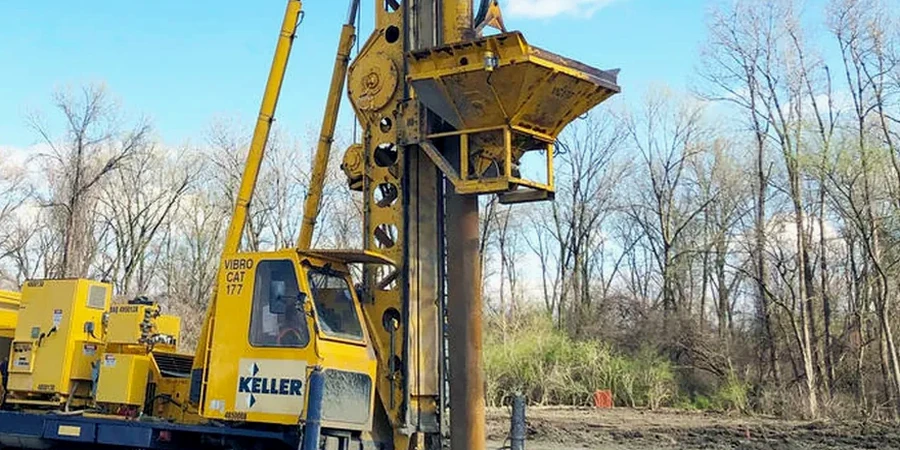
Escondido’s expansion into the San Pasqual Valley placed infrastructure directly over alluvial fans and loose Holocene deposits that the California Geological Survey maps as potentially liquefiable. Designing vibrocompaction here is not a copy‐paste exercise: the city sits at roughly 200 m elevation with decomposed granite interfaces that can reflect vibratory energy unpredictably. We approach each site by correlating SPT drilling data with target relative density curves and defining probe spacing, vibration frequency, and withdrawal rates that respond to Escondido’s specific stratigraphy. Because the city’s summer groundwater levels fluctuate by several feet, saturation conditions must be factored into the compaction plan before any rig mobilizes.
Vibrocompaction design succeeds when the probe spacing matches the dominant grain size—too wide and the soil mass never reaches the critical relative density.